By Bindu Gopal Rao
[/vc_column_text][vc_column_text]HAWK (Hostile Activity Watch Kernel) is a suite of software tools, including mobile apps and server systems, designed to assist forest officials in real-time gathering, management, and analysis of information pertaining to forest and wildlife crime.
HAWK can digitize every facet of wildlife crime management within a state, transforming the entire process into a centralized system. Currently, the State Forest Departments of Kerala and Karnataka are using the software, with a pilot test being conducted in the state of Uttar Pradesh. This year, the team intends to commence operations in the state of Tamil Nadu as well.
THE SYSTEM
HAWK serves as an advanced wildlife crime intelligence gathering and management system. Leveraging cutting-edge digital technology, it centralizes information and discerns networks to ascertain pivotal elements in a crime or potential crime situation. “This system has the capability to recognize location-based crimes and scrutinize associated data through machine learning. Subsequently, the predictive analysis module generates valuable insights into criminal networks derived from this data. The implementation of HAWK can enhance the efficiency of the state forest department by streamlining tasks such as data entry, document preparation, and approvals, thereby saving time,” says a spokesperson from Wildlife Trust of India.
MONITORING MODE
An offense is segmented into three phases – Case Registration, Investigation Stage, and Post-Investigation Stage. Throughout these processes, various activities such as case detection, documentation, submission to court, arrest, seizure, evidence collection, preparation of expert investigation documents, charge sheet submission, and court procedures occur. “At every stage, complete access is provided to managers, and real-time notifications are provided to the concerned officers. Moreover, features include tracking suspected vehicles and monitoring habitual offenders within the state. Additionally, the data collected during offenses can be utilized to generate various types of reports, aiding officials in making strategic decisions,” says a spokesperson from Wildlife Trust of India.
Prior to the implementation of the centralized wildlife crime management system, offense reviews occurred only two or three times a year. However, with this system, officials receive real-time updates, enabling them to provide strategic guidance promptly. This guidance supports frontline forest staff in acting swiftly. Additionally, previously collected field data would often sit unused on shelves or in paper bundles. The system now allows users to utilize this data as per the end user’s need.
HELPING HANDS
By streamlining the completion time of case activities, staff can allocate their valuable time to other conservation efforts. Additionally, since staff typically rotate to different offices every three years, they may struggle to grasp all key information within this brief period. “Previously, they would invest significant time in poring over extensive documents to gain insights. However, with the system in place, logging in grants access to 50% of the information relevant to the specific range. Furthermore, with just a few clicks, they can access scrutinized data on various aspects such as offenders, poaching gangs, hotspots, major species, and conflict areas,” says a spokesperson from Wildlife Trust of India.
CUSTOMIZED CUES
The system is developed using Vue.js, Node.js with the database MongoDB. In India, each state has its own set of forest laws, such as the Kerala Forest Act and the Karnataka Forest Act. During the initial phase of development, we recognized this diversity and designed the system to accommodate customization. This involved incorporating regional languages, adding office names and designations, and making basic structural adjustments to suit specific requirements.
TRAINED HANDS
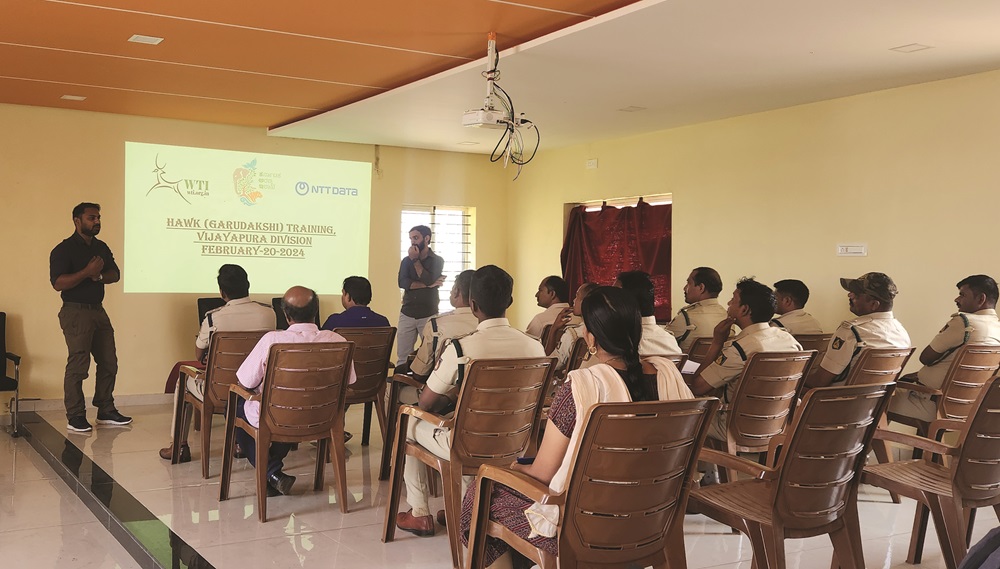
Introducing the system among frontline forest staff is relatively more challenging than software development itself as it involves a behavioural change. “Many forest department officials still adhere to old case management techniques inherited from the British era. Consequently, they may initially resist adopting new technology, as it requires building trust. Moreover, documents generated by the system are directly used in court proceedings, causing apprehension among staff about potential career implications if errors occur. Therefore, effective training is vital for frontline staff. This training not only imparts technical skills but also raises awareness about the benefits and usage of a centralized crime management system. The training of frontline forest staff has been a key intervention and the successful adoption of this system in Kerala is a direct result of this,” says a spokesperson from Wildlife Trust of India.
STAYING SAFE
As time progresses, so do the methods used to commit wildlife crimes. Consequently, enforcement agencies must also adapt to the latest technology. To effectively manage these challenges, WTI has developed a unique module known as ‘Cyber HAWK.’ Cyber HAWK is a Citizen Science Initiative developed by the Wildlife Trust of India to gather information from citizens all around the country on cyber illegal wildlife trade. Through the Cyber-Hawk mobile application, individuals can conveniently report wildlife trade incidents encountered online or offline. The reported crime is validated under the 4*4 grid verification method by dedicated WTI analysts and qualified actionable intelligence is shared with the enforcement agencies. This initiative also provides a platform to manage and store data related to the illegal wildlife trade.

Wouldn’t it be a blessing to have government wildlife divisions concerned enough about the welfare of wildlife to have a HAWK system. Instead, wildlife managers boost populations of huntable wildlife so that firearms and ammunition, bows and arrows, crossbows and bolts are bought and used against wild animals. If you are reading this, I’m sure you agree that wildlife management in the US needs to change.