Uri is a canton where recreational hunting is not merely practiced, but defended as an Alpine heritage. The mountains, the tradition, the community: everything merges into an identity system in which criticism is not seen as constructive feedback, but as an attack on one’s own way of life. Psychologically, this creates a defense mechanism that is reinforced through referendums, political escalation, and ritualistic self-affirmation.

Psychology of recreational hunting in the canton of Uri
Follow Us
Uri is a canton where recreational hunting is not merely practiced, but defended as an Alpine heritage. Special hunts for pregnant red deer, a predator control initiative with 70 percent approval, a rejected species protection initiative for endangered ptarmigan: the psychological patterns in Uri reveal an identity system that does not integrate criticism, but rather deflects it.
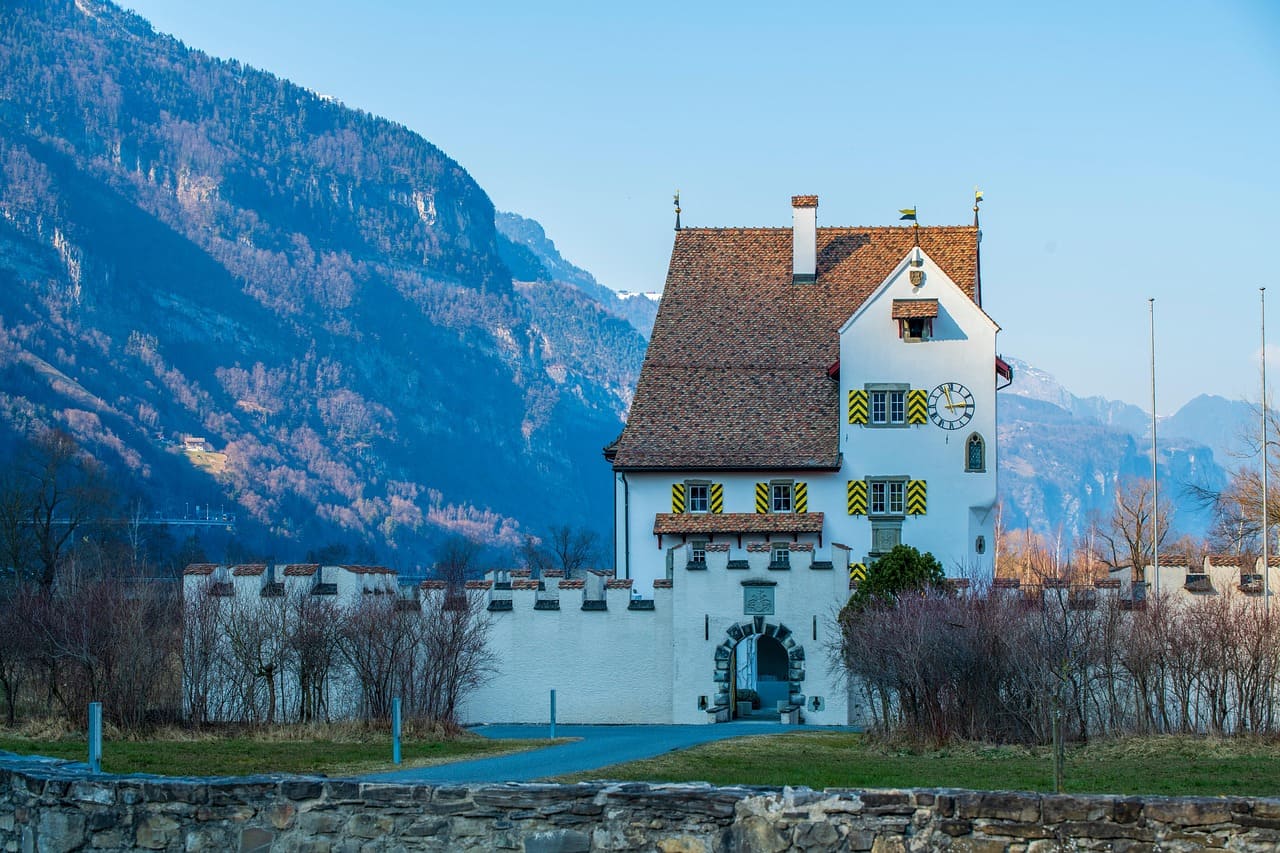
Hunting by license is permitted in the canton of Uri.
The big game hunting season begins in early September, the small game hunting season in mid-October. A specific number of animals may be killed per hunting license. The hunting season is limited to a few weeks, but its psychological impact extends far beyond that. Those who hunt in Uri see themselves as part of an order that has regulated the relationship between humans and the mountains for generations. It is precisely this self-perception that makes the system so resistant to change.
Special hunts and re-hunts: Escalation as a permanent state
Every year, the same pattern emerges in the canton of Uri: the regular red deer hunt is insufficient to meet the officially mandated culling quotas. In 2024, 264 stags were killed during the red deer hunt, but the number of female stags killed canton-wide was 145 animals below the target. Consequently, a supplementary hunt was ordered in all four hunting regions of the canton. The scenario repeated itself in 2025: only 218 stags were killed, even fewer than the previous year.
Psychologically, this structure is revealing. The retaliatory hunting is not interpreted as a failure of the system, but rather as proof of its necessity. The less effective regular hunting is, the more its intensification is demanded. A classic control reflex is at play: if the measure is ineffective, the measure itself is not questioned, but its intensity is increased. This protects the self-image of recreational hunters as an effective force for maintaining order.
The timing of the post-season hunt is particularly problematic. It begins in November and can extend into December. In a letter to the editor , Karl Mattli pointed out that at this time, red deer hinds are already three months pregnant and still accompanied by their spring calves. The special hunt thus interferes with a biologically highly sensitive phase. Furthermore, the animals are already in their winter quarters and have slowed their metabolism. If they are driven away by gunfire, they have to rapidly rev up their metabolism, leading to increased energy consumption and consequently more browsing damage.
Herein lies a paradox of fundamental psychological importance: recreational hunting creates precisely the damage it claims to combat. Intensive hunting drives wild animals into the forest, where, lacking grasses and herbs, they nibble on tree buds. Browsing damage increases, which in turn serves as justification for even more hunting. This self-reinforcing cycle is not addressed by hunting authorities, but rather rendered invisible. Psychologically, it is a closed system of legitimation that reinterprets its own flaws as confirmation of its necessity.
Internal link: Carnage during the special hunt in the canton of Uri
Predator Initiative: When fear becomes the constitution
A key event for understanding hunting psychology in Uri is the popular initiative “On the Regulation of Large Predators,” which was accepted on February 10, 2019, with 70.2 percent approval. Launched by the farmers’ association, the initiative demanded that the canton enact regulations for protection against predators and for population control. The “promotion of large predator populations” was to be prohibited.
Psychologically, this vote should be interpreted less as a political measure than as a collective expression of discontent. In practice, nothing changed as a result of its adoption: the demands were already largely met by existing legislation, and the cantons have no leeway for their own predator control policies. WWF Uri called the initiative “absurd” and pointed out that the canton of Uri was already fully utilizing its available options. Even the responsible government councilor, Dimitri Moretti, admitted that they would have to “wait” until the federal legislation was revised.
What the initiative reveals psychologically is a deep-seated sense of threat that cannot be resolved by factual arguments. Wolves, bears, and lynxes are not perceived as returning to an ecosystem, but as intruders in an ordered world. The wording “Promoting large predator populations is prohibited” demonstrates a reversal of perpetrator and victim: it is not the wild animal that is protected, but rather the human order from the wild animal. In Unterschächen, 96.1 percent voted in favor of the initiative, in Isenthal 93.2 percent, and in Spiringen 88.8 percent. The more rural and alpine the area, the stronger the support.
Psychologically, a mechanism is at work here that social psychology describes as threat reactance: the more one’s own territory and autonomy are perceived as threatened, the more severe the counter-reaction. The initiative was not a tool for solving the problem, but rather a release valve for a diffuse feeling of loss of control. The president of the farmers’ association, Wendelin Loretz, tellingly spoke of a “warning call or even a cry for help to the federal government.” This is the language of threat, not of substantive policy.
Internal link: Uri: People’s initiative against wolves, bears and lynxes
Ptarmigan and snow hares: When species conservation loses out
Another psychologically revealing event is the popular initiative “Let the ptarmigan and snowshoe hare live,” which the voters of Uri put to a vote on May 18, 2025. The initiative called for a hunting ban on snowshoe hares and ptarmigan, whose populations are demonstrably declining and which are on the Red List of Threatened Species. In 2023, 244 ptarmigan and 837 snowshoe hares were killed by recreational hunting in Switzerland.
The initiative was rejected. Psychologically, the result is at least as significant as that of the predator control referendum. This was because the issue here was not an abstract threat from predators, but a concrete question: Should endangered species still be allowed to be hunted for recreation? The answer was yes, and this in a context where even the canton of Ticino had already banned ptarmigan hunting in 2021.
The arguments of the hunting lobby are psychologically revealing. The former president of the Uri hunting association argued, in essence, that recreational hunters are not a threat, but rather protectors of nature. A blanket ban would “weaken an essential practice of nature conservation.” Herein lies the central interpretive pattern: killing is framed as conservation, and anyone who questions killing is supposedly endangering conservation. This semantic inversion is a classic example of cognitive dissonance reduction.
Internal link: People’s initiative for the protection of ptarmigan and snow hare
Wolf cull 2022: Control over everything
In May and June 2022, the Uri Security Directorate ordered the shooting of a wolf after at least five goats and 13 sheep were killed in the municipality of Wassen. The CHWolf association strongly condemned the shooting permit, arguing that it did not comply with the applicable federal hunting regulations. In particular, they argued that seven of the killed sheep were kept in unprotected areas and therefore should not be included in the “shooting quota.”.
Psychologically, this episode is relevant on several levels. First, it demonstrates how quickly the reflex to kill kicks in as soon as a predator becomes visible. Second, the reaction reveals a deficit in livestock protection: After five years of conceptual work on the “Upper Reuss Valley Alpine Pasture Concept,” effective livestock protection had apparently not been established. Instead of addressing this gap, responsibility was shifted onto the wolf. Third, the political context shows how the wolf serves as a projection screen for a perceived loss of control.
Internal link: Uri grants permission to shoot wolves
Relaxation instead of control: Hunting regulations 2024
Instead of tightening hunting regulations, the canton of Uri relaxed the rules for recreational hunters in 2024. Foreign nationals no longer need to have resided in the canton for ten years before they are allowed to hunt. And proof of marksmanship no longer needs to be provided with the weapon actually used for hunting, but only with a “hunting-suitable” weapon.
Psychologically, this is a revealing signal. It shows where regulatory energy is flowing: not into protecting wildlife, but into facilitating access to recreational hunting. While endangered species continue to be hunted and the annual culling of pregnant hinds is mandated, the barriers to accessing firearms are being lowered.
The relaxation of the marksmanship test is particularly explosive. Anyone using a different weapon for recreational hunting than the one with which they demonstrated their shooting proficiency increases the risk of misfires and animal suffering. The fact that the hunting authorities frame this relaxation as an “adaptation to changed circumstances” demonstrates how effectively bureaucratic language functions as a psychological tool for smoothing over concerns.
Internal link: Canton of Uri relaxes regulations for hobby hunters
Ibex reduction culls: Trophy hunting with an administrative stamp
Every year, the Uri Security Directorate authorizes so-called reduction culls of ibex. In the Brisen, Oberalp/Tödi, Susten/Meiental, and Unteralp-Guspis colonies, ibex and ibex females are authorized for culling. Allocation is based on the age of the hunting permit holders: the oldest receives a permit first. The venison and trophies go to the successful hunters.
This practice demonstrates how thin the line between “regulation” and trophy hunting actually is. The official order lends the shooting a bureaucratic legitimacy, but the structure resembles a lottery for a coveted hunting experience. Psychologically, this is crucial: the official framework relieves those involved of moral responsibility. They are not acting of their own volition, but “on behalf of the canton.” This delegation of responsibility is a well-known mechanism of moral self-exoneration.
Hunting accidents and hunting crime: Suppressed realities
On September 7, 2023, a 38-year-old amateur hunter was hit by a stray bullet in the Steinboden area of the municipality of Spiringen and had to be airlifted to the hospital by the Rega air ambulance service. In the canton of Uri, there are also indications of suspected poaching and animal welfare violations, which are documented on the blacklist of Jagd Schweiz (Hunting Switzerland ).
The way hunting accidents are handled is psychologically telling. They are framed as individual misfortunes, not as systemic risks inherent in an armed recreational activity. The police investigate the “exact sequence of events,” but a fundamental debate about the safety risks of recreational hunting does not take place.
Alpine identity as a protective shield
All these examples combine to form a consistent psychological pattern. Hobby hunting in Uri is not an isolated practice, but rather an identity system. It is interwoven with alpine self-perception, with the image of the “mountain dweller” who orders his environment, and with a deeply rooted conviction that this order is threatened from the outside.
Criticism is therefore not treated as a constructive objection, but as an attack on the Alpine way of life. The mechanism is always the same: whoever questions recreational hunting is questioning Uri itself. This equation of practice and identity makes the system extraordinarily resistant to change.
The canton of Geneva has demonstrated since 1974 that professional wildlife management can function without recreational hunting. This model is not discussed in Uri, but rather ignored. Psychologically, this is consistent: the mere existence of a functioning alternative threatens the narrative of its indispensability.
Internal link: Geneva Model: Hunting ban since 1974
Uri is not an isolated case, but a magnifying glass. In no other canton is it so clearly evident how alpine identity, political symbolism, and hunting practices intertwine to create a system that doesn’t integrate criticism, but rather deflects it. Anyone who wants to understand the psychology of recreational hunting in Switzerland must understand how Uri operates.
Cantonal psychology analyses:
- Psychology of recreational hunting in the canton of Nidwalden
- Psychology of recreational hunting in the canton of Uri
- Psychology of recreational hunting in the canton of Obwalden
- Psychology of recreational hunting in the canton of Schwyz
- Psychology of recreational hunting in the canton of Jura
- Psychology of hunting in the canton of Basel-Landschaft
- Psychology of hunting in the canton of Zurich
- Psychology of hunting in the canton of Geneva
- Psychology of hunting in the canton of Bern
- Psychology of hunting in the canton of Solothurn
- Psychology of hunting in the canton of Aargau
- Psychology of hunting in the canton of Ticino
- Psychology of hunting in the canton of Valais
- Psychology of hunting in the canton of Graubünden
- Psychology of hunting in the canton of St. Gallen
- Psychology of hunting in the canton of Fribourg
- Psychology of hunting in the canton of Vaud
- Psychology of hunting in the canton of Lucerne
More on the topic of hobby hunting: In our dossier on hunting, we compile fact checks, analyses and background reports.